Peptide Reconstitution Calculator
Educational tool to understand dosage calculations, reconstitution concepts, and unit conversions
Reconstitution Calculator
Educational Tool Only: This calculator is for educational purposes to understand reconstitution concepts. Always verify calculations independently and consult appropriate resources.
Why Reconstitution Confuses Beginners
Reconstitution is often the biggest hurdle for newcomers to peptides. It's not just about mixing powder with water—it's about understanding concentrations, unit conversions, and accurate dosing.
The confusion stems from several factors: switching between milligrams and micrograms, calculating concentrations, understanding insulin syringe units, and figuring out how much to inject for a specific dose.
The good news: Once you understand the concepts and practice the calculations a few times, it becomes straightforward. This calculator helps you visualize the process.
What is BAC Water?
Bacteriostatic Water (BAC Water) is sterile water containing 0.9% benzyl alcohol as a preservative. The benzyl alcohol prevents bacterial growth, keeping your reconstituted peptide solution safe for multiple uses.
Regular sterile water doesn't contain this preservative. If you use plain sterile water and puncture the vial multiple times, bacteria can grow, contaminating your solution. BAC water solves this problem by inhibiting bacterial growth for up to 28 days when refrigerated.
Why it matters: Most peptide vials will be used multiple times over several days or weeks. BAC water ensures each dose remains sterile and safe.
Read Complete BAC Water Guide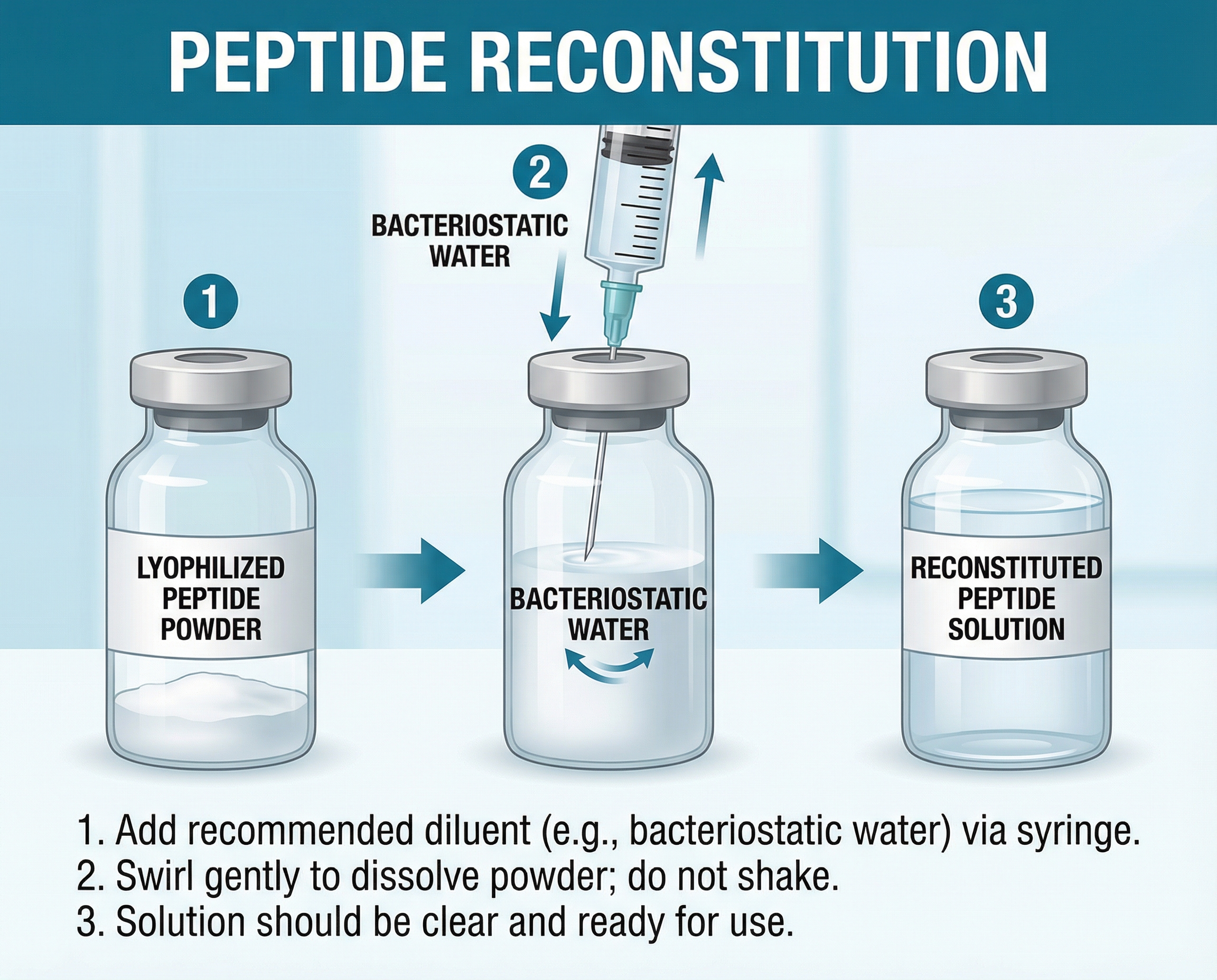
Reconstitution Concepts Explained Simply
1. The Basic Process
Peptides arrive as a freeze-dried powder (lyophilized). You add BAC water to dissolve the powder, creating a liquid solution. The amount of water you add determines the concentration—more water means more dilute, less water means more concentrated.
2. Understanding Concentration
Concentration tells you how much peptide is in each milliliter of your solution. If you have 5mg of peptide and add 2ml of water, your concentration is 2,500 mcg/ml (5mg = 5,000 mcg, divided by 2ml = 2,500 mcg/ml).
3. Insulin Syringe Units
Most people use insulin syringes for peptides. These syringes have 100 "units" per 1ml. So if your concentration is 2,500 mcg/ml, each unit contains 25 mcg of peptide (2,500 / 100 = 25 mcg per unit).
4. Calculating Your Dose
If you want to inject 250 mcg and each unit contains 25 mcg, you need to draw up 10 units (250 / 25 = 10 units). This is exactly what our calculator does automatically!
mg vs mcg: The Critical Difference
This is the single most important concept to master. 1 milligram (mg) = 1,000 micrograms (mcg). Confusing these units can lead to a 1,000x dosing error.
Quick Reference:
- • 0.5 mg = 500 mcg
- • 1 mg = 1,000 mcg
- • 2.5 mg = 2,500 mcg
- • 5 mg = 5,000 mcg
- • 10 mg = 10,000 mcg
Real example: If your protocol calls for 250 mcg but you mistakenly use 250 mg, you're taking 1,000 times more than intended. This is why double-checking your units is absolutely critical.
Read Complete mg vs mcg Guide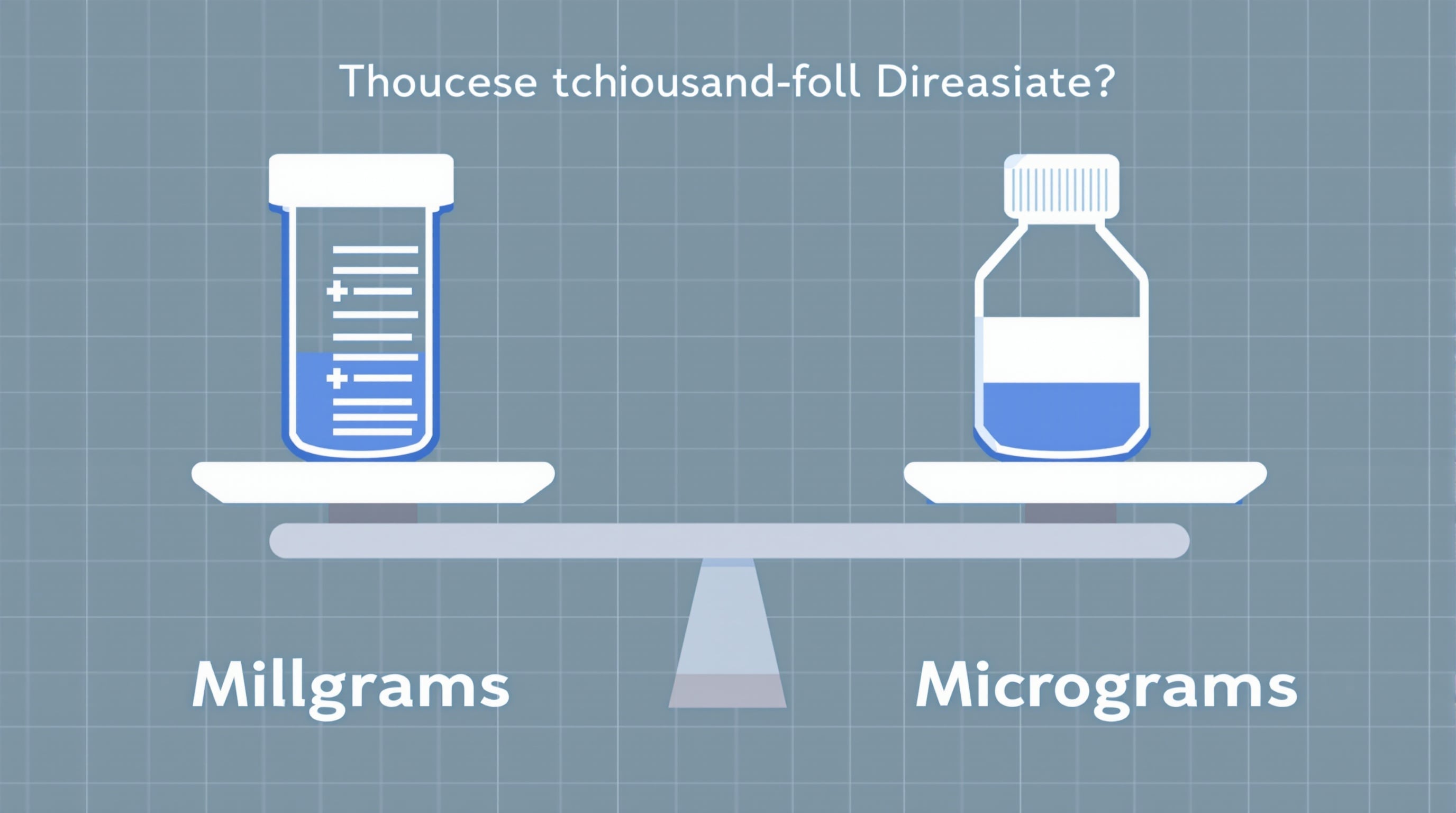
Common Unit Confusion Examples
❌ Mistake #1: Confusing mg with mcg
Seeing "500 mcg" on a protocol and measuring out 500 mg instead. This is a 1,000x overdose.
❌ Mistake #2: Forgetting to convert
Having a 5mg vial but calculating as if it's 5,000 units instead of 5,000 mcg. Units and mcg are not the same!
❌ Mistake #3: Wrong syringe type
Using a 1ml syringe without unit markings instead of a 100-unit insulin syringe, making accurate dosing nearly impossible.
Mistakes to Avoid
Storage Errors
Always refrigerate reconstituted peptides. Room temperature storage degrades peptides quickly, rendering them ineffective.
Shaking the Vial
Never shake peptide vials. Swirl gently instead. Shaking can damage the peptide structure and reduce effectiveness.
Expired BAC Water
Check BAC water expiration dates. Once opened, it's good for 28 days refrigerated. Mark the date on the vial!
Dirty Technique
Always use alcohol swabs to clean vial stoppers before inserting needles. Sterile technique prevents contamination.
Ready to Learn More About Peptides?
Explore our complete peptide directory and educational guides
Educational Tool Disclaimer
This calculator is for educational purposes only. Always verify all calculations independently. Not medical advice. Consult qualified professionals for health decisions.